
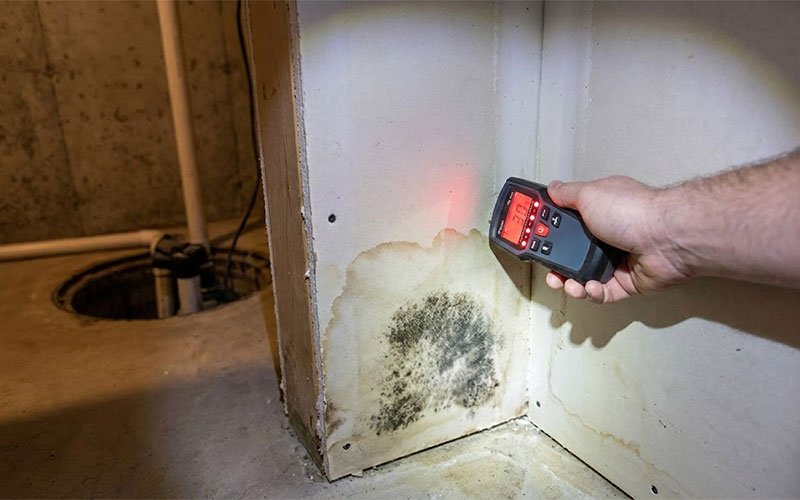
The “M-word.” In real estate, few words cause more panic than Mold.
For buyers, spotting black spots in a basement corner can be a deal-breaker. For sellers, it can mean expensive remediation bills. But here in the humid Midwest—especially in Plainfield and Will County—mold is a biological reality we have to understand to defeat.
At Norman Home Inspections, we want to shift the conversation. Instead of just fearing mold, we need to focus on the thing that makes it possible: Moisture.
The Simple Math of Mold
Mold spores are everywhere. They are in the air you are breathing right now. They are floating in your backyard and drifting through your open windows. You cannot eliminate mold spores entirely.
However, mold spores are harmless until they find the “Magic Triangle” they need to grow:
- Food: Any organic material (wood, drywall paper, dust, cardboard).
- Temperature: Generally between 40°F and 100°F (basically, the temperature inside your house).
- Moisture: Water, high humidity, or condensation.
You can’t get rid of the food (your house is built of it). You can’t change the temperature (you need to be comfortable). The only variable you can control is Moisture.
Where We Hide Moisture in Plainfield Homes
During our inspections, we use moisture meters and thermal imaging to find the hidden water sources that fuel mold growth. Here are the most common culprits:
1. The “Finished” Basement
We often see basements finished with standard drywall and carpet placed directly over the concrete slab. Concrete is porous; it wicks moisture from the ground. If that moisture gets trapped behind a wall with no airflow, mold eats the paper backing of the drywall.
Tip: Always use moisture-resistant materials in basements and ensure proper exterior drainage.
2. The Attic Bypass
As we discussed in our ventilation article, warm, moist air leaking from your bathroom into a cold attic condenses on the roof sheathing. We frequently find fuzzy black growth on the north side of attic roofs where the sun doesn’t dry it out.
3. The Silent Plumbing Leak
A slow drip under a kitchen sink or behind a washing machine might not create a puddle you can see, but it raises the local humidity enough to start a colony behind the cabinet.
When Should You Test?
If you see visible mold, you generally don’t need to test it to know you have a problem. You need to fix the water source and remove the damaged material.
However, air quality testing is valuable when:
- The home smells musty, but you can’t see anything.
- There was a prior flood that was “cleaned up,” and you want to ensure it was done right.
- You or your family members have specific allergies or respiratory issues.
The Norman Home Inspections Approach
We don’t just point at a dark spot and say “Good luck.” We try to identify the source. Is it a grading issue outside? A lack of gutters? A disconnected dryer vent?
Fixing the mold without fixing the water is like bailing out a sinking boat without plugging the hole. You have to stop the water first.
Smell something musty?
Don’t guess. Let Norman Home Inspections hunt down the moisture source.
📞 (815) 782-0544
🌐 www.normaninspections.com
📍 Serving Plainfield, Joliet, Naperville, and surrounding areas.