
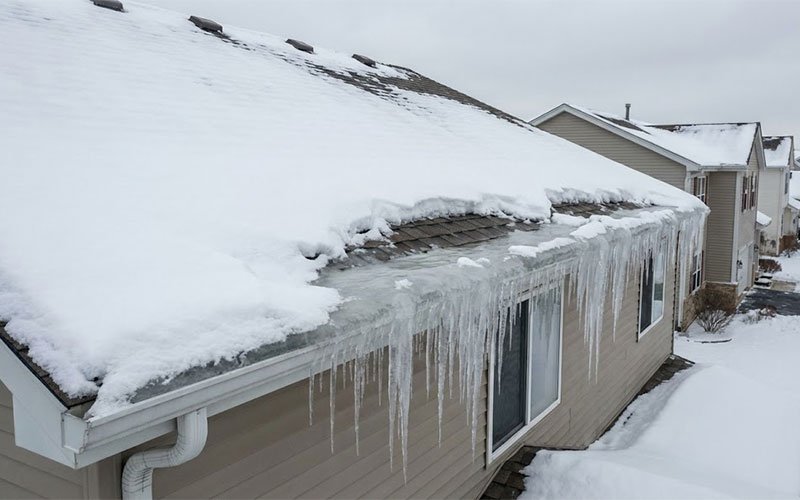
Driving through Plainfield or Joliet in January, you often see homes dripping with long, sparkling icicles. They look picturesque, almost like a scene from a holiday card. But to a home inspector, those icicles are a screaming red flag.
They are the tell-tale sign of an Ice Dam—one of the most destructive forces your home faces during an Illinois winter.
At Norman Home Inspections, we see the aftermath of ice dams every spring: water-stained ceilings, rotted roof sheathing, and moldy attics. Here is what is happening up on your roof and how to stop it.
What is an Ice Dam?
An ice dam is exactly what it sounds like: a wall of ice that forms at the edge of your roof (the eaves). It prevents melting snow (water) from draining off the roof. The water backs up behind the dam and pools. Since it has nowhere to go, it eventually seeps under your shingles and into your attic, insulation, and walls.
The Real Cause: It’s Not the Snow
Most homeowners blame the weather. “We had too much snow!” or “It’s just too cold!”
But the real culprit is inside your house. Ice dams are caused by heat loss from your living space into your attic.
- The Warm Attic: If your insulation is poor or you have air leaks, heat escapes your house and warms the roof deck.
- The Melt: This heat melts the bottom layer of snow on your roof, even when it is 20°F outside.
- The Freeze: The water trickles down to the eaves (the overhang). Since the eaves aren’t over the heated house, they are freezing cold. The water freezes there, building up a rim of ice.
How We Inspect for Ice Dam Risks
You don’t have to wait for a leak to know if you are at risk. During our inspections, we look for the specific conditions that create dams:
1. Insulation Gaps
We crawl into the attic to check the depth of your insulation. We often find that insulation is thin or missing near the edges of the roof—exactly where you need it most.
2. Blocked Ventilation
Your attic needs to breathe. Cold air should enter through the soffit vents (under the eaves) and exit through the roof vents. This keeps the roof deck cold, preventing the snow from melting prematurely. We check to make sure nobody has shoved insulation over the soffit vents, choking off the airflow.
3. Attic Bypasses
We look for unsealed gaps where pipes, wires, or light fixtures enter the attic. These are like chimneys, pumping warm, moist air from your house right up to the underside of your roof.
What To Do If You Have One
If you see a massive ice dam forming:
- DO NOT climb a ladder in icy conditions. It is not worth the risk.
- DO NOT hack at the ice with a hammer or axe. You will destroy your shingles.
- DO call a professional roofer to steam it off safely.
- DO rake the snow off the bottom 3-4 feet of your roof (from the ground!) with a roof rake to stop the fuel source.
The Permanent Fix
The only way to permanently stop ice dams is to fix the “Hot Attic” problem. That means air sealing the attic floor, adding insulation to R-49 or R-60 levels, and ensuring proper ventilation.
Stay warm, stay dry, and keep an eye on those eaves!
Is your attic leaking heat?
Let Norman Home Inspections evaluate your insulation and ventilation today.
📞 (815) 782-0544
🌐 www.normaninspections.com
📍 Serving Plainfield, Joliet, Naperville, and surrounding areas.